
AYA are delighted to be sponsoring the Her Sport Personality of the Year Award! AYA is committed to delivering only the highest quality food supplements and vitamins to support health and well-being for all the family
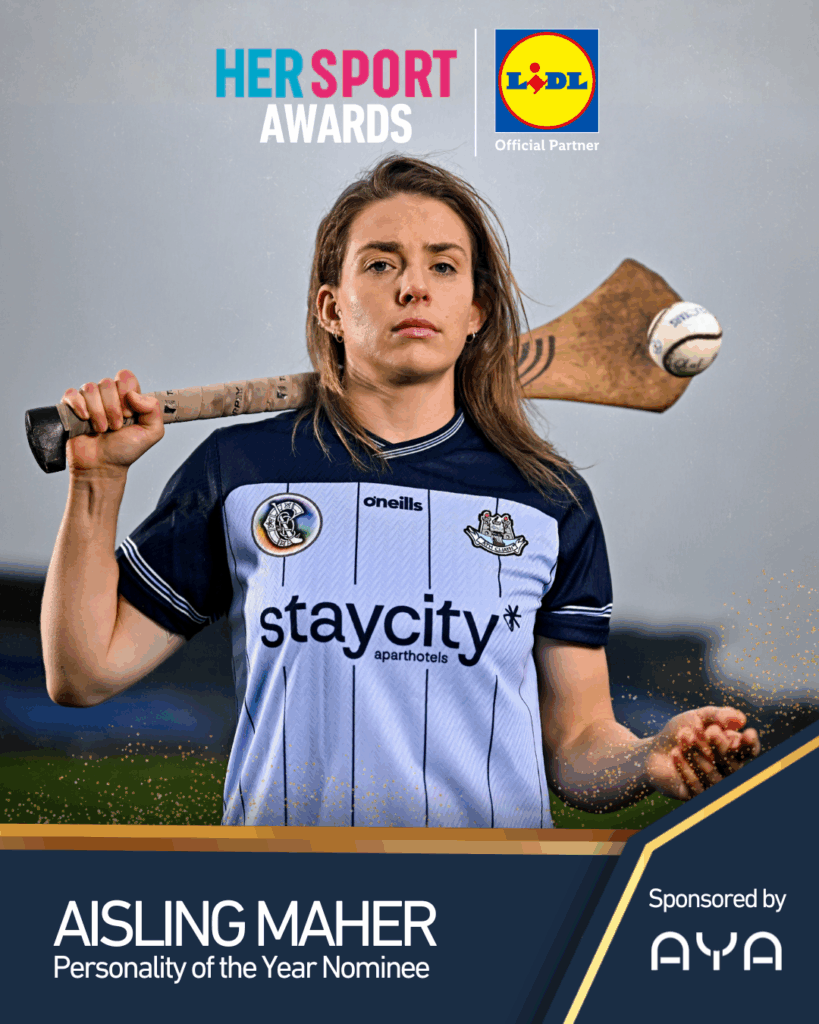
Aisling Maher’s 2025 campaign reshaped camogie far beyond anything contained between the white lines. As Dublin captain she remained central to her county’s on-field ambitions, yet it was her influence off the pitch that defined her year and, in many eyes, modernised the sport itself.
The tipping point arrived in early May, when Dublin and Kilkenny were informed that their Leinster semi-final would not proceed unless both teams abandoned their shorts and returned to skorts. Maher later described the moment as a personal low, but its impact proved catalytic. The players’ frustration developed into a collective stand, and inside three weeks the issue reached Special Congress. On 22 May, delegates voted by an extraordinary 98 per cent to allow shorts as an official part of the camogie kit.
Maher became the movement’s clearest advocate. In interviews she kept the conversation anchored in performance and participation, pointing to messages from parents explaining why their daughters were leaving camogie for sports with more practical uniforms. Her argument — that choice matters for comfort, confidence and retention — resonated across age groups and counties.
On the pitch she continued to guide Dublin as captain; off it she helped usher in one of the most consequential reforms the sport has seen in a generation. The uniform rule change, confirmed after Congress, marked a shift in culture as much as governance, and Maher’s leadership placed her at the forefront of a conversation about who the game belongs to and how it should evolve.
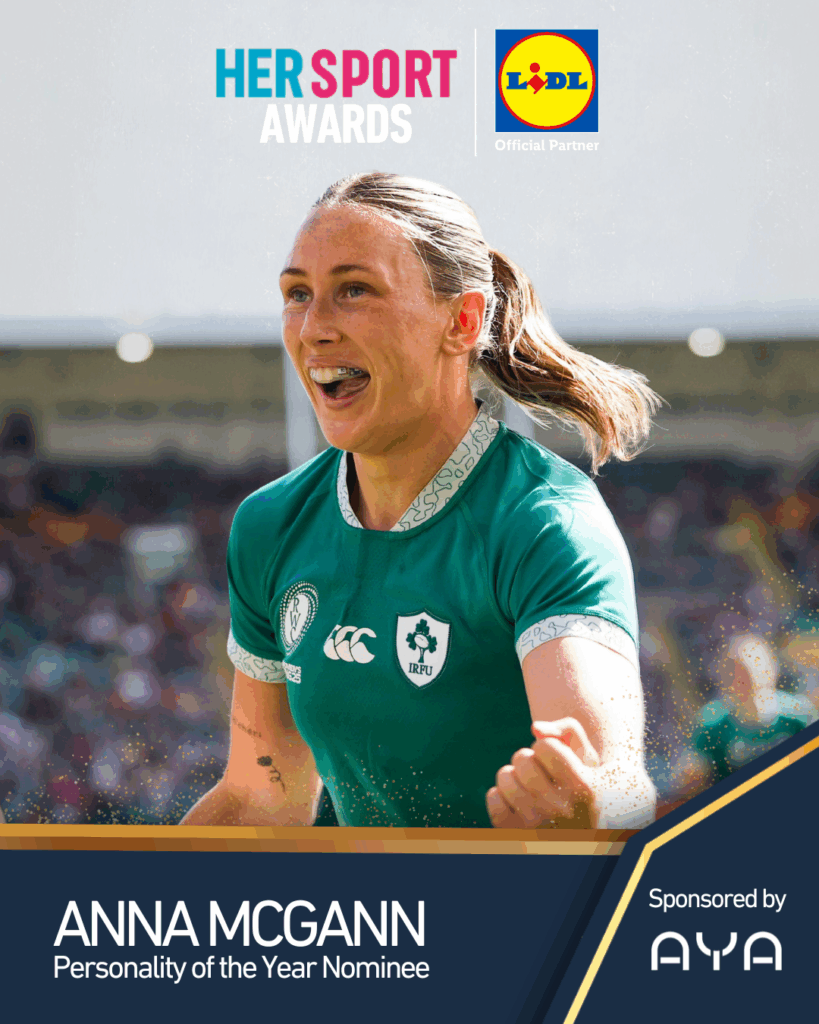
Anna McGann’s 2025 season operated on several levels at once — impactful rugby, open storytelling and the emergence of a young entrepreneur whose voice carried well beyond the dressing room. As Ireland’s 15s side accelerated through the Six Nations and into the World Cup cycle, McGann became one of its most dependable contributors, offering pace, physicality and a growing maturity in a team rediscovering its competitive edge.
Her influence, however, reached further. McGann used TikTok and Instagram to document the realities of elite rugby with an honesty that set her apart. She spoke about the ACL injury that cut short her Olympic ambitions in 2024, about the loneliness of rehab, and about the doubts that come with waiting to feel like yourself again. That candour made her one of the most recognisable faces in Irish women’s sport and a connector for younger players navigating similar obstacles.
Alongside her rugby commitments she grew Chaos The Label, the jewellery brand she founded during her injury layoff. The project emerged from grief and upheaval — including the loss of her father — and evolved into a creative outlet that captured her resilience and identity. Its continued momentum in 2025 marked McGann as both athlete and business founder, someone building opportunities on and off the field.
Her season combined athletic consistency with emotional transparency and entrepreneurial ambition, creating a profile that resonated well beyond the pitch and positioned her as one of rugby’s most compelling modern voices.
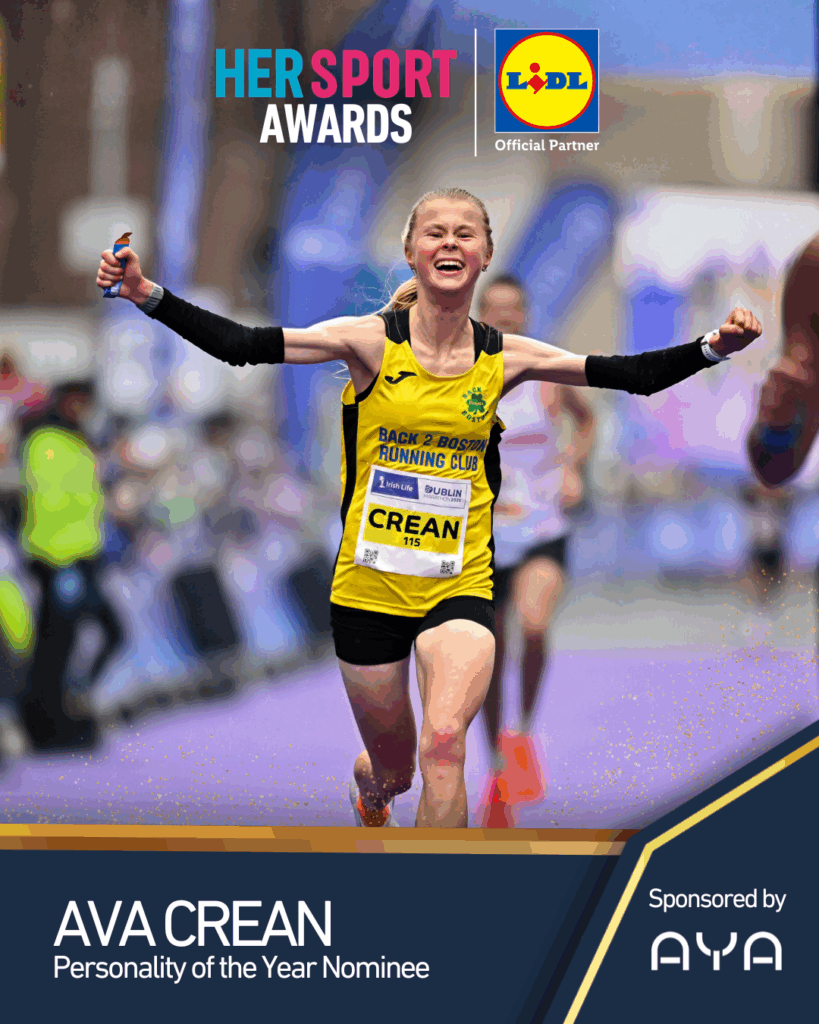
Ava Crean’s rise in 2025 reads like the kind of sporting story people talk about for years — a young athlete who arrived almost out of nowhere and reshaped expectations overnight. At the Dublin Marathon she entered the elite field as a rising teenager and crossed the line as the national champion, claiming the Irish title in 2:34:12 — a nine-minute personal best that carried her to sixth place overall and 13th on Ireland’s all-time list.
The scale of her progression became the story. Crean had only begun competitive running in April, debuting at the Manchester Marathon with a target of 3:30 before astonishing herself with a 2:49 finish. By the time she arrived in Dublin she had run just two marathons, yet she carried herself with a composure that belied her experience. Her victory made her the youngest Irish women’s national marathon champion in history.
Much of the public fascination owed to the speed of her transition. A few months earlier she had been a youth basketball player with no long-term plans in endurance sport. In 2025 she became one of Ireland’s fastest marathoners and a symbol of what can happen when opportunity meets fearless ambition.
Crean’s season offered more than a breakthrough time — it introduced an athlete whose path had unfolded in real time, drawing supporters into a story still gathering pace.
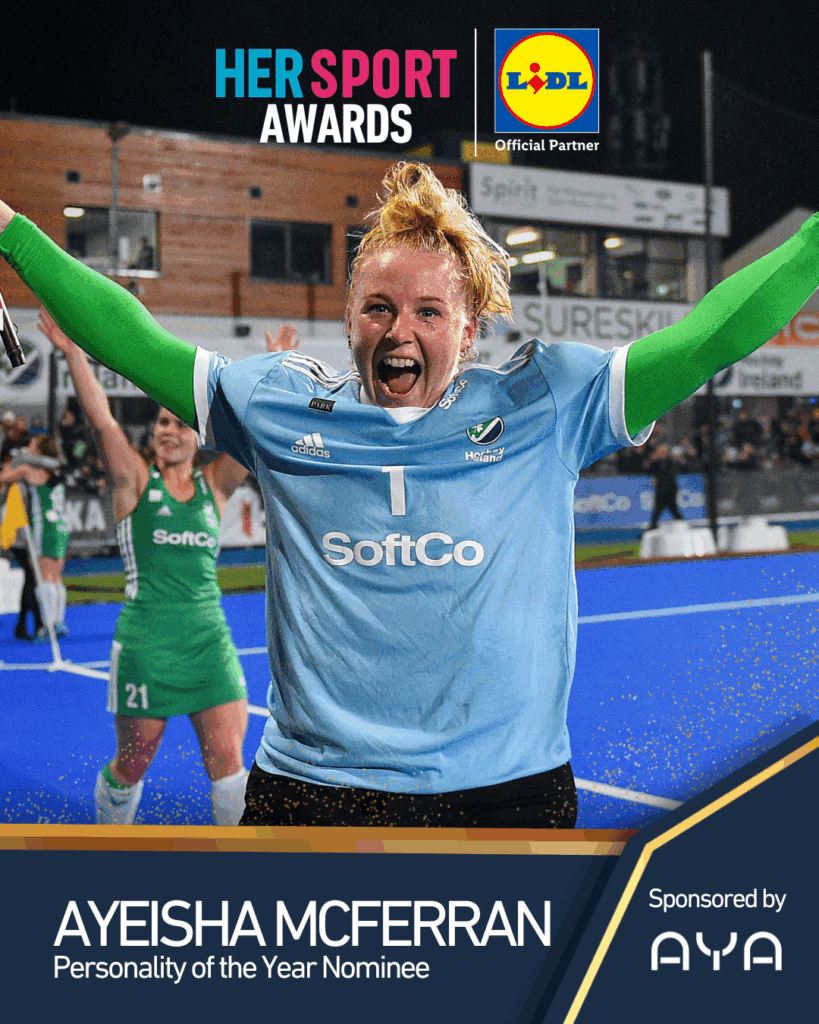
Ayeisha McFerran’s 2025 campaign spanned two arenas: the goalmouth, where she remains one of Ireland’s most dependable performers, and a growing digital landscape that has positioned her among the country’s leading athlete communicators.
In international competition she continued to anchor Ireland’s defence, her saves and decision-making shaping the rhythm of major fixtures and qualification matches. Teammates and coaches alike leaned on her reliability, and throughout a challenging competitive calendar she remained a cornerstone of Ireland’s structure.
Away from the pitch she advanced a different type of impact. Her podcast, Unboxed, became a platform for conversations that rarely reach the public domain — the uncertain months of injury, the strain of relocating clubs, the grind of selection cycles and the psychological weight carried by athletes in transition. The tone was earnest rather than polished, and the result was a body of work that connected audiences to the human realities behind elite performance.
That commitment to authentic storytelling earned her a place on the shortlist for Creator of the Year at the 2025 Team Ireland Olympic Sport Awards. The nomination recognised the breadth of athlete voices she platformed and her willingness to pull back the curtain on a profession often seen only through results.

Catriona Jennings delivered one of the outstanding endurance performances of 2025, redefining the limits of Irish ultra-running with a world record that stood out even within a sport accustomed to extraordinary feats. At the Tunnel Hill 100 Mile in Illinois she stopped the clock at 12:37:04, the fastest women’s 100-mile time ever recorded and quick enough for fourth overall against the entire men’s and women’s field.
The scale of the achievement was striking. It was Jennings’ first attempt at the distance, yet she averaged 7:34 per mile across 160.9 kilometres and surpassed Camille Herron’s 2017 world record by more than five minutes. Her precision, pacing and resilience turned a debut into a global benchmark.
The world record sat atop an already formidable résumé. Earlier in 2025 she had taken the Irish 50km record in 3:16:33 and also holds the national 100km record, confirming her versatility across the ultra spectrum. Each performance contributed to a year in which she moved from national standout to international figurehead.
Jennings’ run in Illinois forced observers to reconsider what is possible in the sport — not for its theatricality, but for its execution. It was the product of deep experience, meticulous preparation and a capacity to sustain excellence over a distance most athletes will never attempt.
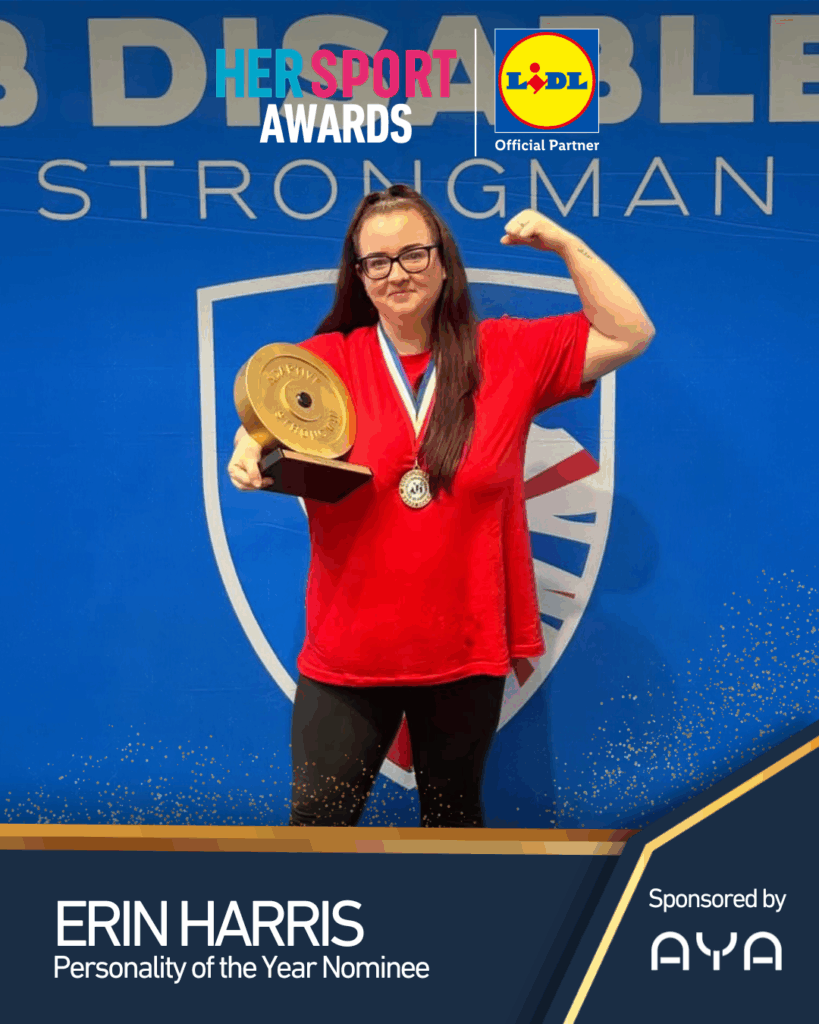
Erin Harris’ 2025 season continued her rise as one of the most distinctive voices and performers in adaptive strength sport. Competing in the Women’s Standing Class Two division, she built on her reputation as England’s Strongest Disabled Woman with a year shaped by further titles and world-record ambitions — including a targeted 120-kilogram Atlas stone lift that would place her among the most powerful athletes of her class worldwide.
Her competitive identity is rooted in lived experience. Born with Type 4 Congenital Ulnar Dysplasia, Harris lacks her ulnar bone, two fingers and half the wrist bones in her right arm. Yet she built a strength profile that few can match: squatting 100 kilograms for sets of eleven and tackling events designed to test absolute power.
Her reach extended far beyond lifting platforms. A major appearance on the globally watched Sidemen Show introduced adaptive strongwoman sport to a new audience, framing Harris not only as an elite competitor but as a charismatic advocate for disability representation. Millions of viewers encountered an athlete whose presence — confident, humorous, self-assured — demonstrated how sport can challenge assumptions and reshape visibility.
Her message remained consistent throughout the year: strength comes in many forms, and participation should never be limited by perception. In 2025 she turned that belief into influence, amplifying a sport and community that has long deserved wider attention.

Mary Nolan Hickey’s 2025 was a year of reflection, reverence and the closing of a chapter unmatched in Irish sport. For the first time since 1980 she did not start the Dublin Marathon, ending a 45-year sequence that included every edition of the race — even the two virtual years. No runner, man or woman, has ever matched the streak.
The race organisers responded with a gesture equal to the legacy. October 2025 saw the inaugural presentation of the Mary Nolan Hickey Perpetual Cup, awarded to that year’s women’s elite champion, Ava Crean. The trophy acknowledged not only Nolan Hickey’s endurance but her role in normalising women’s participation at a time when distance running was still an emerging space for female athletes.
Her own history remains remarkable. She was one of only 40 women among 2,100 runners in the Dublin Marathon’s first year. She later became one of the first Irish women to break three hours on the course and famously completed the 1988 race while six months pregnant — a reminder of her commitment to the sport and the barriers she helped dismantle.
The end of the streak did not diminish her influence; it framed it. In 2025 she moved from participant to symbol, her name now etched into the race she helped define across five decades.
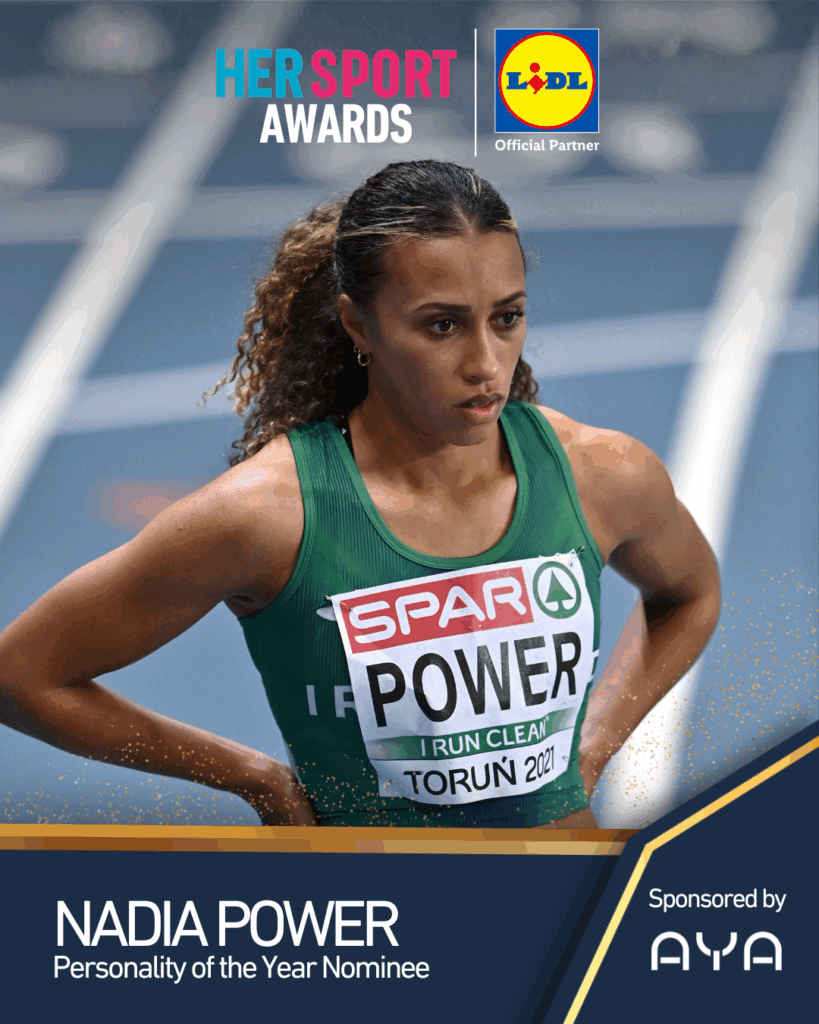
Nadia Power’s 2025 season carried the qualities rarely captured in performance sheets — perseverance, discipline and the daily work required to rebuild a career disrupted by injury. An 800-metre specialist with international pedigree, she spent much of the year recommitting to training and recovery, aiming to reclaim the consistency that made her one of Ireland’s most promising mid-distance athletes.
Her progress unfolded alongside a growing presence away from the track. Swifter, the sports-performance and lifestyle coaching platform she co-founded with James Madden, expanded its reach in 2025. The venture showcased her ability to translate high-performance principles into practical guidance, positioning her as part athlete, part educator.
Power’s openness became one of her strongest assets. Through YouTube, social channels and national television — including an appearance on Ireland AM — she described the emotional toll of setbacks, the relentlessness of rehab and the discipline required to re-enter elite competition. The honesty resonated with viewers who rarely see the unseen phases of a professional career.
Her year was defined not by podiums but by perspective: a season that captured what it means to rebuild without losing identity or ambition.

Nicola Doran’s 2025 season added another extraordinary chapter to a career already framed by achievements in some of the world’s harshest waters. In February, at Clontarf Baths, she completed the Fastest Para Ice Mile (female) in 29 minutes 57 seconds, claiming a Guinness World Record in water measured at 4.57°C. It was a performance equal parts physical resilience and mental fortitude.
The moment carried heavier meaning given its context. Doran was competing with reduced power in her left arm and leg following a previous accident, and the Ice Mile represented her final major swim before surgery to amputate. The knowledge lent the achievement an emotional gravity that reverberated far beyond the finish.
Her record built on an already formidable résumé. At the 2023 IISA World Championships in France she won three Para Swimming Gold medals and three Silver, marking her as one of the sport’s elite competitors. Later that year she became the first person ever to swim the full 65-kilometre length of the Ards Peninsula, completing the distance across five stages — one of the standout Irish open-water feats of the decade.
Doran’s 2025 record reinforced her reputation as an athlete who consistently pushes beyond the limits of expectation, turning endurance into something both visceral and inspiring.
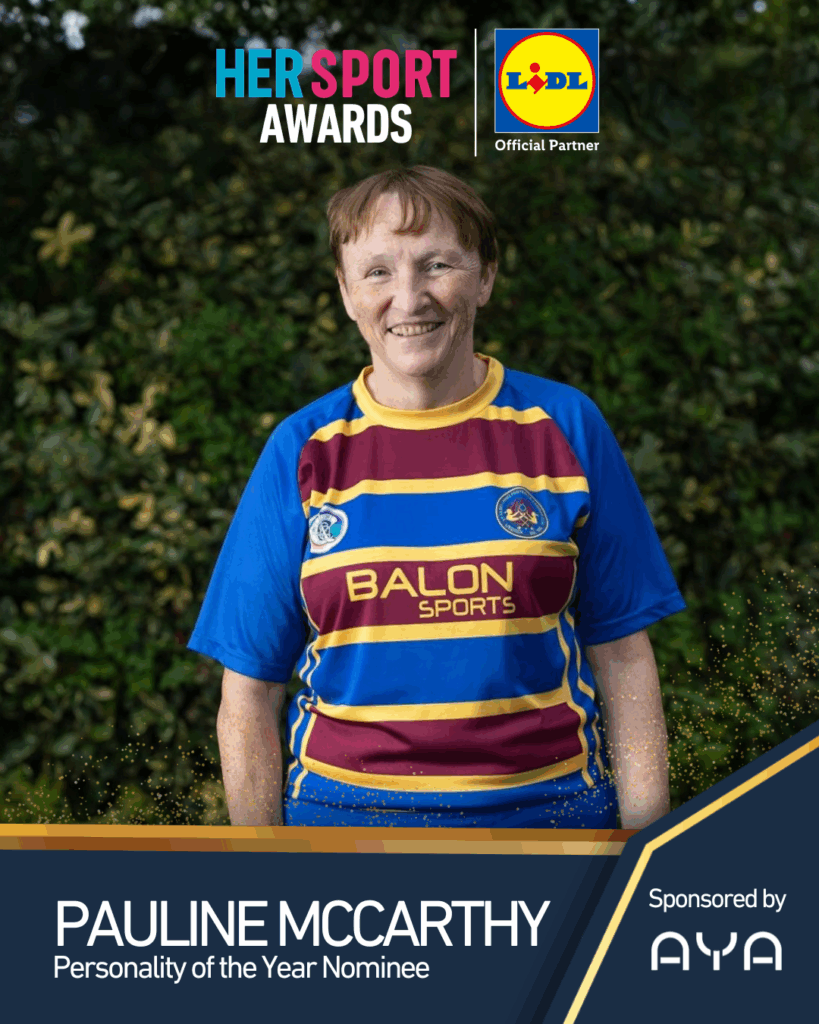
Few figures in Irish sport embody longevity quite like Pauline McCarthy. At 66 years of age, she is still lining out for St Ailbe’s in Limerick, competing in Senior Camogie and Ladies Football with the same commitment she carried as an 11-year-old joining the club’s Junior Camogie team more than fifty years ago. Her continued presence on the field in 2025 is not a curiosity — it is the natural continuation of a career built on endurance, pride and a deep love of the games.
Her competitive record reads like a timeline of women’s sport itself. McCarthy represented Limerick at inter-county level in both camogie and football from 1974 to 2005, an extraordinary four-decade span that few athletes in any sport have ever matched. Her medal collection is equally rare: five Senior County Camogie Championships with St Ailbe’s and two All-Ireland Club Football Championships with Newtownshandrum, achievements that position her among the most decorated dual players of her era.
But her influence extends far beyond titles. McCarthy has become a living argument for lifelong sport, an ambassador for physical health and the belief that participation has no expiry date. After scoring the winning goal in the 2022 Junior Football Final, she delivered the line that has since followed her everywhere: “Age is only a number — keep playing as long as you can play.” In 2025, still competing at senior level, she continues to prove the truth of her own words.