




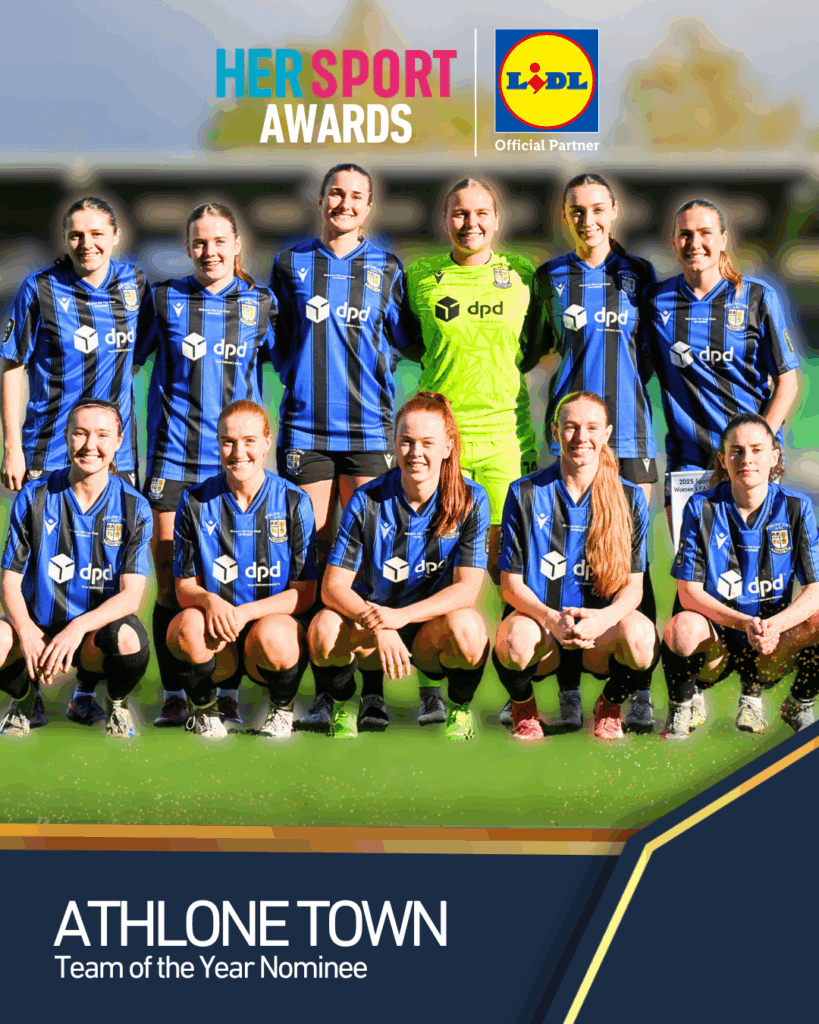
Through 2025, Athlone Town Women played with the conviction of a team intent on setting the standard in Irish football. They retained the SSE Airtricity Women’s Premier Division title, sealing the championship with two games remaining in a 4–0 win away to Cork City on 1 October. Kelly Brady hit a hat-trick on the night, with Kayleigh Shine adding the other goal. Across the league campaign they strung together a series of clear-cut results – 2–0 against Wexford, 3–0 over Cork and Bohemians, 5–0 against DLR Waves and 3–0 versus both Galway United and Waterford – and by early autumn had conceded only seven goals in their first 16 league fixtures. A 2–0 victory over Shamrock Rovers in September returned them to the top of the table and underlined how reliably they responded whenever pressure increased. In defending their crown they became only the fifth different club ever to win back-to-back Women’s Premier Division titles.
Cup football brought its own storyline. Athlone lifted the Sports Direct FAI Women’s Cup for the second time, edging Bohemians 3–2 in a thrilling final at Tallaght Stadium on 19 October. Once again Brady produced all three goals, this time in front of 3,608 supporters. The win completed the club’s first league-and-cup double and confirmed a season in which their attacking edge and defensive record were in rare alignment.
Their progress carried into Europe. On debut in the UEFA Women’s Champions League qualifying rounds they recorded a first European victory against Croatian champions ŽNK Agram with a 3–0 scoreline, having already beaten Cardiff City WFC 4–0, and later added a 2–0 success over Serbian champions Crvena Zvezda in a third-place playoff in the Netherlands. Those results signalled that Athlone’s trajectory now extends beyond domestic competition.
Individual awards captured the scale of the campaign. Brady finished as league Golden Boot winner with 20 league goals and 26 in all competitions, while she, Madison Gibson, Róisín Molloy and Hannah Waesch were all shortlisted for Women’s Premier Division Player of the Year, with Brady ultimately taking the honour. Multiple Athlone players were included in the Team of the Year, reflecting a squad that, across 2025, became the reference point for Irish women’s club football
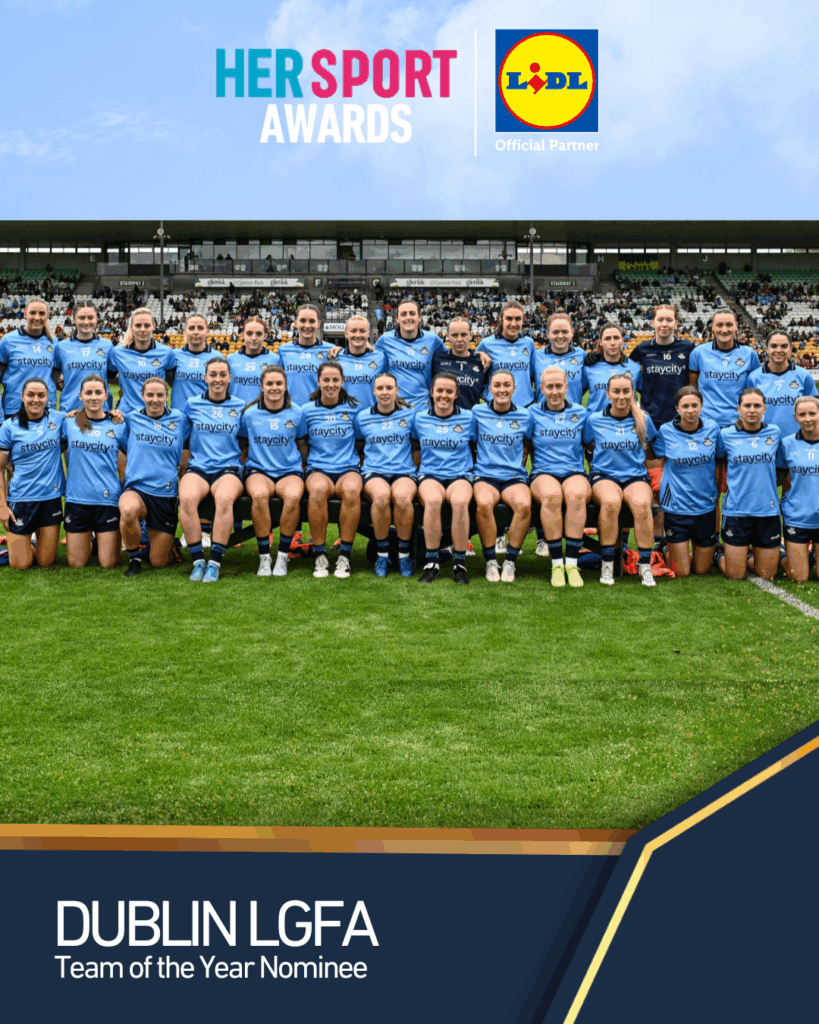
Across the 2025 season, Dublin re-established themselves as the pace-setters in ladies football. With Paul Casey and Derek Murray stepping up as joint managers, the group managed change in the backroom team while reasserting control on the pitch, reclaiming provincial dominance and finishing the year with a seventh TG4 All-Ireland Senior title. The campaign blended experienced leaders, emerging contributors and a defensive structure that held up across high-pressure occasions.
The first marker came in Leinster. A 2–13 to 1–12 win over Meath at Croke Park in May delivered the provincial crown and set a platform for the All-Ireland series. From there Dublin’s momentum grew: a 3–15 to 0–7 quarter-final win over Cork that showcased their scoring power, a tense extra-time semi-final in Tullamore where they edged Galway 3–14 to 2–14, and then a return to Croke Park for the final act of the season.
The All-Ireland decider on 3 August became a showcase of control and cutting edge. In front of 48,089 spectators, the third-largest attendance ever for the final, Dublin defeated Meath 2–16 to 0–10. First-half goals from Niamh Hetherton and Nicole Owens pushed them into a 2–9 to 0–4 interval lead, and the closing stages highlighted their composure with and without the ball. Orlagh Nolan’s influence across the contest earned her the Player of the Match award, while captain Carla Rowe climbed the Hogan Stand steps to lift the Brendan Martin Cup.
Recognition at the TG4 All-Star Awards underlined how strong the panel was across the pitch. Dublin supplied seven All-Stars: defender Jess Tobin, Leah Caffrey (collecting a fifth award), Sinéad Goldrick (an eighth), midfielder Éilish O’Dowd and forwards Rowe (fifth), Hannah Tyrrell (third) and Kate Sullivan. Tyrrell’s season was further acknowledged when she was named TG4 Senior Players’ Player of the Year, the headline individual honour voted by her peers.
Through new management, extra-time tests and high-scoring wins, Dublin maintained the same core qualities: structure, work rate and clarity in big moments. The 2025 season returned Leinster and All-Ireland titles, a leading All-Star presence and a campaign widely viewed as one of the most complete in the county’s recent history.
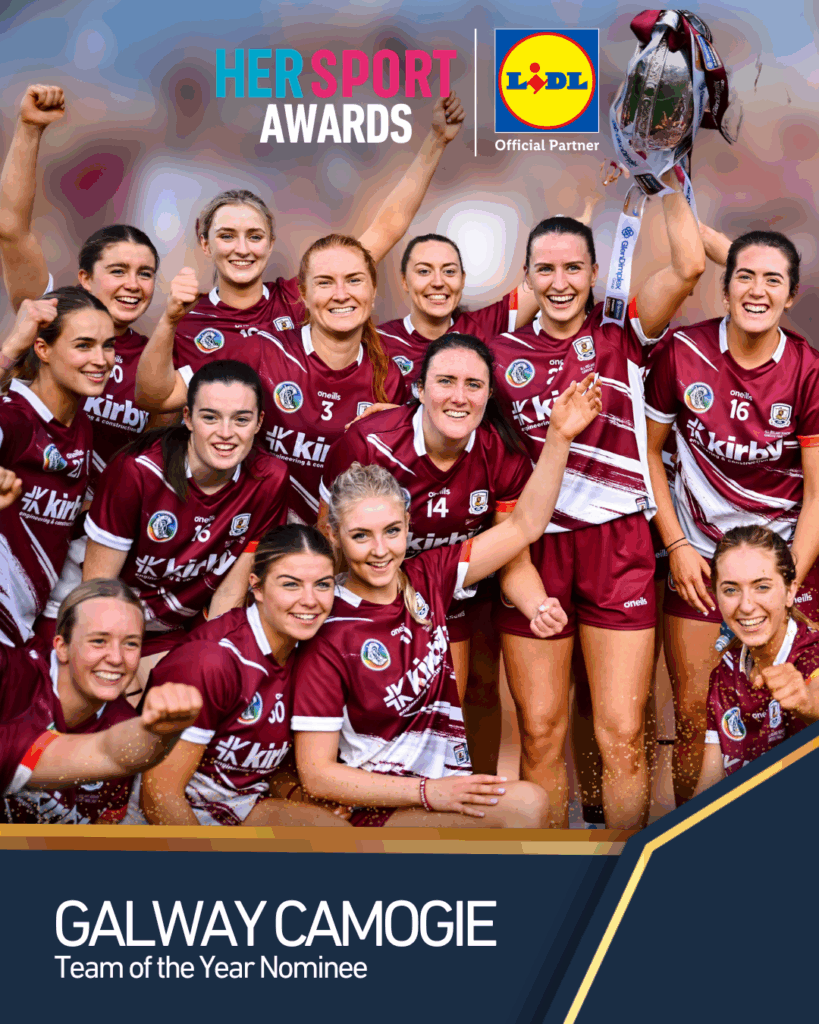
2025 will be remembered in Galway as a year when resilience and precision brought the county back to the summit. Under Cathal Murray’s guidance, the senior team assembled a campaign that combined group-stage control, knockout composure and a championship final decided in the very last moments, ending with the O’Duffy Cup returning west for a fifth time and the awards season dominated by maroon jerseys.
Galway’s route to Croke Park started with a flawless group phase. They topped Group 2 with four wins from four, recording key victories over Waterford, Dublin and Kilkenny and securing direct passage to the semi-finals. In the last four they pushed clear of Tipperary late on, winning 1–18 to 1–11 through a mix of disciplined defending and a wide spread of scorers.
The final on 10 August developed into a contest that swung repeatedly in tension and momentum. Galway controlled the first half, building a 1–9 to 0–7 lead through a composed team display capped by a goal from Mairéad Dillon and aided by a crucial penalty save from goalkeeper Sarah Healy. Cork’s late fightback brought the sides level deep into added time, only for captain Carrie Dolan to send over a free from close to 60 metres in the 62nd minute. That strike edged Galway 1–14 to 1–13 ahead, and the full-time whistle followed soon after, confirming victory in front of 28,795 supporters and ending Cork’s attempt at a three-in-a-row. For Murray, it was a third All-Ireland as manager after titles in 2019 and 2021.
Awards season reflected the extent of Galway’s influence. They led the 2025 PwC Camogie All-Stars with eight selections: Sarah Healy, Shauna Healy, Dervla Higgins, Ciara Hickey, Aoife Donohue, Ailish O’Reilly, Niamh Mallon and Dolan. Donohue was further honoured as PwC GPA Senior Player of the Year, while Murray received the PwC Camogie Manager of the Year award. His impact travelled through the pathway as well, with Galway’s U23s capturing the inaugural U23A All-Ireland title in July.
The numbers behind the campaign showed why the side were so hard to contain. Dolan closed the championship on 0–49, including 39 frees and a ’45, Mallon added 1–18 from play and Donohue contributed 1–9, evidence of an attack that could score in multiple ways in matches that were often tactically tight.
Galway’s 2025 season blended defensive steel, late-game nerve and high-level execution at key moments. The All-Ireland success, breadth of All-Star recognition and emergence of a strong U23 group all underlined the county’s status among the leading powers in modern camogie.
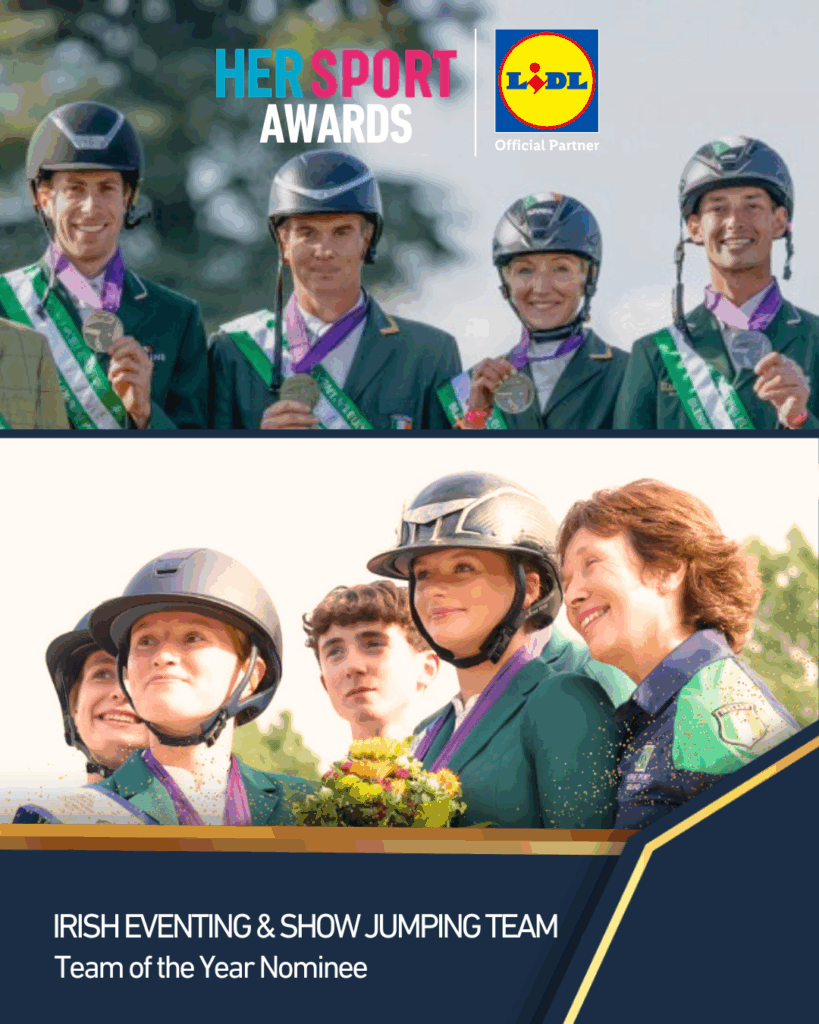
Ireland’s 2025 European Championships campaign stood out for its blend of tradition and new horizons. At senior level, the eventing team climbed back onto the continental podium for the first time in three decades, while the junior show jumpers produced a golden summer that delivered team and individual titles.
In eventing, Ireland secured team silver at the FEI Eventing European Championships in Blenheim Palace, their first medal at this level since 1995 and best result since team gold in 1979. Competing under High Performance Manager Dag Albert, the quartet of Padraig McCarthy (Pomp N Circumstance), Robbie Kearns (Chance Encounter), Aoife Clark (Full Monty De Lacense) and Ian Cassells (Millridge Atlantis) finished second on a total of 161.9 penalties. Germany took gold on 124.9, with France third on 167.5.
The route to that silver medal required a major climb through the standings. Ireland lay seventh after the opening dressage phase before unleashing a strong cross-country performance that moved them up five positions into second. Clark’s elimination over the country meant every score from the remaining three riders would count on the final day. In the show jumping arena McCarthy delivered a clear round, while Cassells and Kearns each lowered a single rail. Those composed efforts secured the silver medal and confirmed Ireland’s most significant European eventing result since the early 1990s.
At youth level in show jumping, Ireland’s juniors turned the FEI Junior Jumping European Championships in Riesenbeck into a statement week. The team of Alice Wachman, Tabitha Kyle, Paddy Reape, Jack Kent (substitute) and Emily Moloney won team gold on a finishing score of 6.99 faults, ahead of the Netherlands on 12.79 and Belgium on 20.60.
The individual leaderboard carried even more Irish colour. Riding Temple Alice, Moloney claimed individual gold, finishing on her first-day mark of 1.47 faults after delivering two clear rounds in the final. Kyle, partnered with BP Goodfellas, matched that composure with two more clears of her own to secure individual silver and complete an Irish 1–2.
Taken together, the senior eventing silver, junior team gold and junior individual gold and silver made 2025 one of Ireland’s most productive European seasons in equestrian sport, spanning generations and disciplines.”
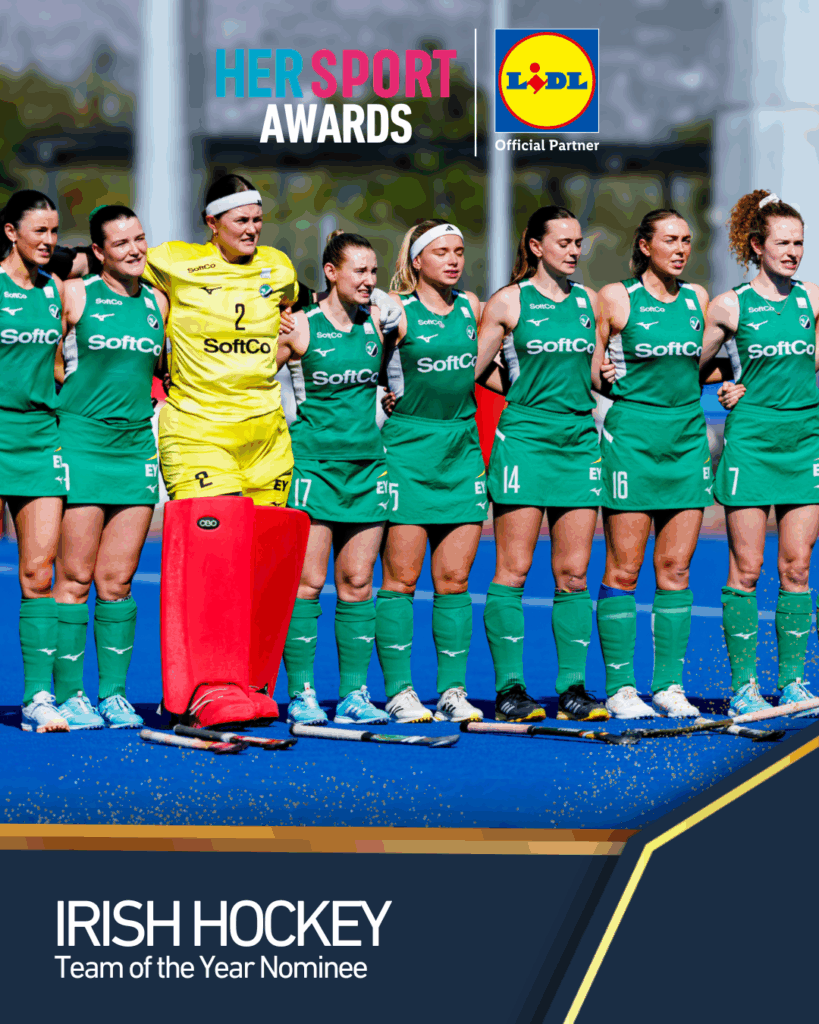
For Ireland’s women’s hockey programme, 2025 represented a step into a new competitive tier. The senior side used a strong Nations Cup campaign in Chile to earn entry into the FIH Pro League for the first time and gained valuable experience against Europe’s strongest teams at the EuroHockey Championships.
The year opened at the FIH Hockey Nations Cup in Santiago, where head coach Gareth Grundie led his first full season in charge. His squad blended seasoned internationals with debutants Mikayla Power and Emily Kealy, and captain Sarah Hawkshaw provided leadership on and off the pitch. Ireland delivered a flawless pool stage: a 3–0 win over Scotland built on control in both circles, a 1–0 victory against New Zealand shaped by a Naomi Carroll finish and several key saves from goalkeeper Ayeisha McFerran, and a 2–0 success against Korea in which Power added her second international goal in only her third cap. They topped Pool B with three wins from three and no goals conceded.
Ireland progressed through the knockout stages to reach the final and finished as Nations Cup silver medallists for the second year running, once again behind New Zealand. When New Zealand later declined the FIH Pro League place associated with the title, the vacant spot passed to runners-up Ireland, who accepted. The decision confirmed Ireland’s promotion to the 2025/26 Pro League and placed them in a competition alongside the world and Olympic champions and other top-ranked nations. It also guaranteed a landmark moment at home, with Ireland preparing to host Pro League fixtures against England and Belgium at the Sport Ireland Campus in December 2025.
The second major assignment arrived at the EuroHockey Championships in Mönchengladbach. Drawn into a demanding group with the Netherlands, France and Germany, Ireland found points difficult to collect yet remained competitive. They lost close contests against the Dutch and the French, earned a scoreless draw against Germany and entered the classification phase for places five to eight. There, a 3–2 loss to Scotland and a 2–1 defeat to England, where Katie Mullan scored following sharp interplay with Niamh Carey, left Ireland eighth overall. The campaign was described as challenging in results terms but also provided extended game time for a growing core ahead of the 2026 World Cup qualification path.
Across both tournaments, familiar names and new faces contributed. Róisín Upton, Mullan and Hannah McLoughlin featured among the scorers at the Euros, McFerran’s goalkeeping in Chile reaffirmed her status among the world’s best, and Power’s early goals signalled the emergence of another threat in attack. By year’s end, Ireland had both a Pro League place secured and a deeper pool of players tested at top European level.
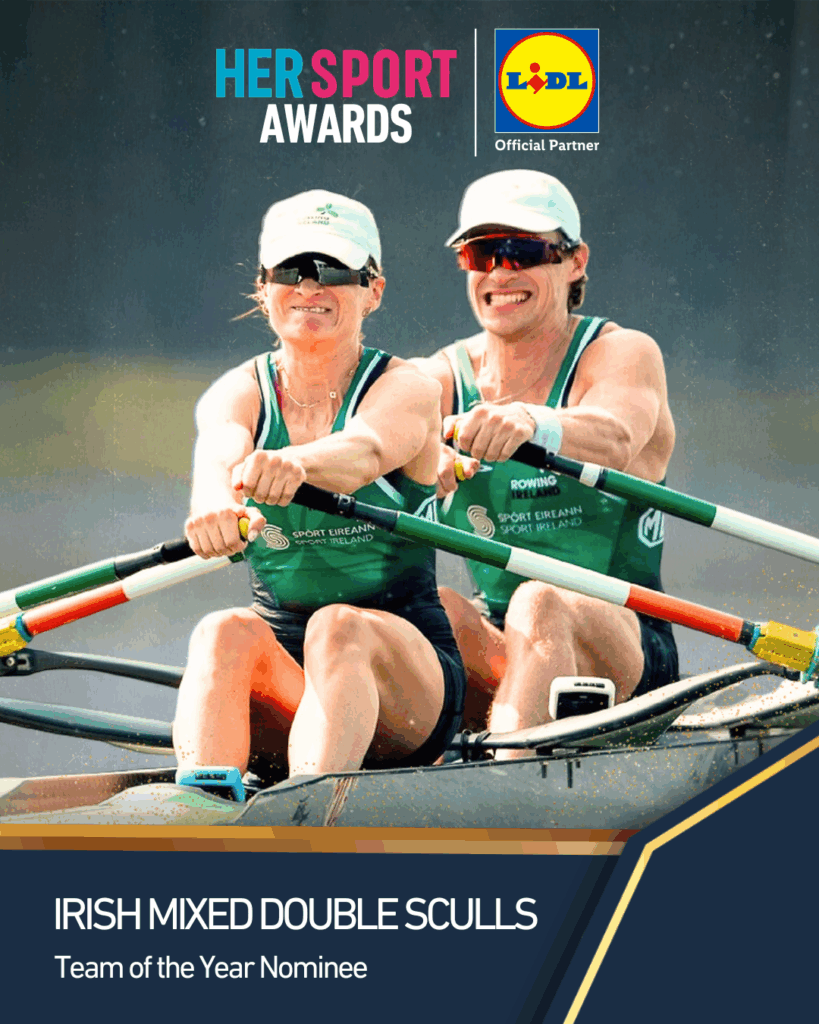
“In rowing, 2025 delivered a breakthrough combination for Ireland in the form of Maggie Cremen and Fintan McCarthy. Together they captured the inaugural World Championship title in the Mixed Double Sculls, establishing a new benchmark in a boat class added to the global programme for the first time and adding a fresh chapter to Ireland’s recent success story on the water.
Their defining performance arrived at the 2025 World Rowing Championships in Shanghai. Racing the Mix2x final, they produced a controlled and tactically sharp row, staying with the front group through the opening stages before moving decisively at halfway. Once in front they managed the closing 1,000 metres with authority, crossing the line in 6:24.22 and finishing 0.69 seconds ahead of the Netherlands, whose crew included Olympic silver medallist Melvin Twellaar. The result secured Ireland’s first world title in the event and the very first gold medal ever awarded in mixed double sculls at a World Championships.
The partnership carried an extra layer of intrigue because of how quickly it came together. Cremen would later describe how they had gone into the regatta with almost no shared race practice, yet their sculling styles meshed from the start. Both athletes are former lightweight specialists who stepped into an open-weight mixed field and prevailed against established heavyweight line-ups, highlighting the technical precision, aerobic engine and competitive temperament within the Irish high-performance system.
For Cremen, the world title crowned a season that showcased her development across multiple disciplines. Having committed fully to open-weight racing for the new Olympic cycle, she won the Irish Senior Single Sculls at the National Championships in July for UCC and added further domestic success at the University Championships with victories in both the Senior Single and Senior Eight.
On the international circuit she spent much of the year in the Women’s Double Sculls alongside Zoe Hyde. The pair raced the W2x at the European Championships in Plovdiv and later at the World Championships in Shanghai, where they navigated the repechage and classification stages to win the B-Final and finish seventh overall. That result placed them firmly among the leading open-weight doubles in the world.”
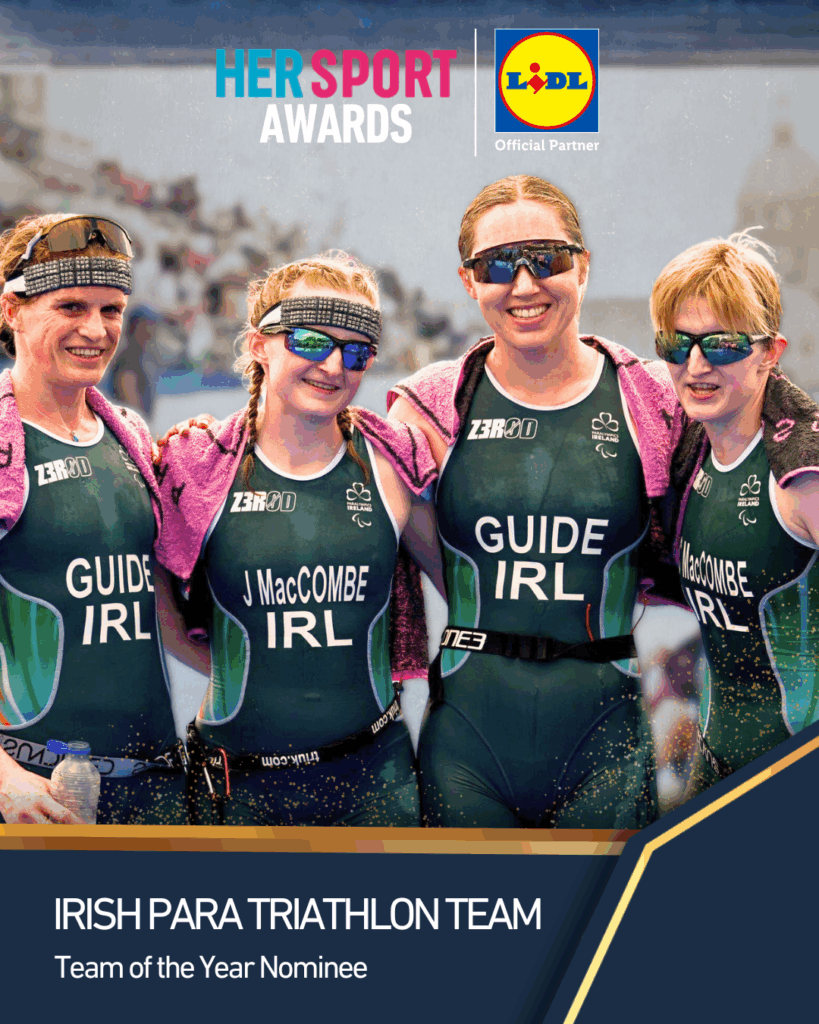
For Ireland’s women in para triathlon, 2025 represented a landmark surge in results and consistency. Two athletes and three guides combined for seven international medals across the season, including a World Triathlon Para Cup victory and multiple World Series podiums, and both main pairings secured top-ten finishes at the World Championships.
The campaign sparked into life in Abu Dhabi, where Chloe MacCombe and guide Aoibh Clarke opened the LA 2028 qualification cycle in emphatic fashion. At the World Triathlon Para Cup they led from the outset, posting the fastest splits in the PTVI category across swim, bike and run. Their finishing time of 1:10:11 reflected both pace and race management, and delivered maximum early ranking points.
From there, the MacCombe sisters built a sustained medal run. In Taranto, Italy, Judith MacCombe and guide Eimear Nicholls stepped onto the World Triathlon Para Series podium with bronze, powered by the second-fastest bike leg of the day against a field that included the reigning Paralympic champion. Only a week later they added another bronze at the Europe Triathlon Para Championships in Besançon, their first major championship medal, after producing the fastest combined bike-run effort in their class.
Chloe’s results continued across continents and guide pairings. Alongside Clarke she claimed a World Triathlon Para Series bronze in Devonport, Australia, where they produced the quickest run split in testing heat. Later in the season, partnered with Aisling Wyer, she secured a further Para Series bronze in Montreal, climbing from fifth after the swim to a podium position through an aggressive ride on the bike, and followed up with another bronze at the Para Cup in Alhandra. Those back-to-back medals confirmed the strength of the new combination.
The World Championships in Wollongong brought the final examination of the year. Despite limited running in the build-up due to injury, Judith MacCombe and Nicholls closed with a superb 19:32 run split to overtake the home Australian pairing and finish sixth, only six seconds outside the top five. Chloe MacCombe and Clarke delivered a steady all-round performance to place eighth, recording a 19:39 run split and holding position from early on the bike to the finishing chute.
Collectively, the Irish women’s PTVI squad produced the most decorated season in the programme’s history, with medals and high World Championships finishes that strengthened Ireland’s standing in a key Paralympic pathway sport.
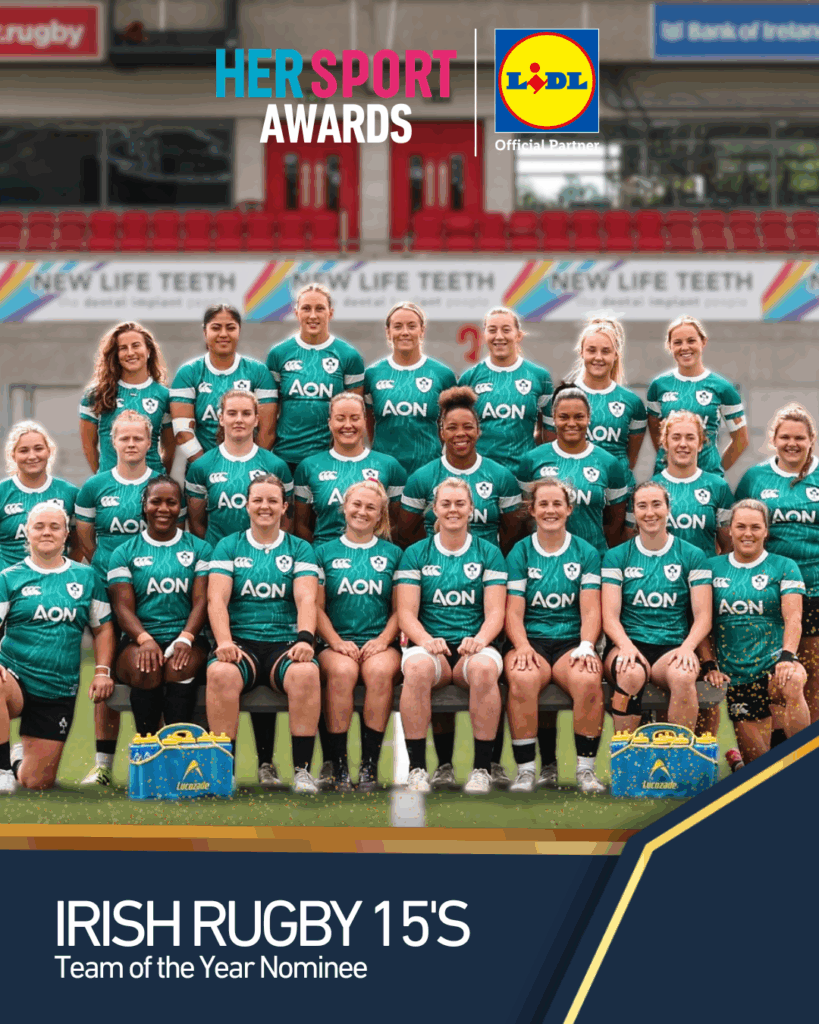
In test rugby, Ireland’s women used 2025 to add substance to their recent revival. A second consecutive third-place finish in the Guinness Women’s Six Nations, two commanding away wins and a return to the Women’s Rugby World Cup that ended in a quarter-final appearance all pointed to a group moving with purpose under head coach Scott Bemand.
The Six Nations campaign showed how far the side had come since 2023. Ireland concluded the Championship with two victories and three defeats, yet the detail behind those results told a richer story. In Parma they recorded a 54–12 win over Italy, the largest Six Nations victory Ireland have achieved against the Azzurre. Wing Anna McGann scored a hat-trick, centre Aoife Dalton was named Player of the Match after a performance built on 15 tackles and nine carries, and out-half Dannah O’Brien landed seven of eight conversions. It was Ireland’s first Six Nations away win since 2021 and first success over Italy since 2022. Three weeks later in Newport they produced another away statement, beating Wales 40–14 with six tries, including a brace from Dorothy Wall and further scores from Linda Djougang and Aoife Wafer.
Wafer’s form became a defining thread of the tournament. Operating in the back row, she crossed for four tries, the most by any forward, and topped the competition for carries (70), metres gained (424.7) and defenders beaten. Supporters recognised her influence when she received 41 per cent of more than 18,500 votes to be named Guinness Women’s Six Nations Player of the Championship, the first Irish woman to claim the award. Team metrics underlined the collective work: Ireland forced more turnovers than any other side (31), retained 98 per cent of their own rucks and were one of only two teams with average attacking ruck speed under three seconds. Hooker Neve Jones completed 51 tackles without a miss, the highest perfect tackle count in the tournament and the most by any front row.
There were setbacks along the way – a close-fought loss to France in Belfast, a heavy defeat to England in front of a record home crowd in Cork and an overtime reversal in Edinburgh against Scotland – yet the direction of travel remained positive. Ireland had become harder to break down and more confident away from home.
Attention then turned to England and the Women’s Rugby World Cup, Ireland’s first appearance at the tournament since 2017 after missing the 2022 edition. The opening pool match in Northampton produced a historic return: a 42–14 win against Japan, the highest World Cup score Ireland have ever posted. Six different players scored tries – Amee-Leigh Costigan, Neve Jones, Béibhinn Parsons, Fiona Tuite, Eve Higgins and Enya Breen – and O’Brien again kicked six from six off the tee.
A week later, Ireland clinched a quarter-final place with a round to spare by defeating Spain 43–27 at Franklin’s Gardens. Seven more tries followed, with Grace Moore and McGann each touching down twice in a match described as high-scoring and occasionally scrappy but ultimately controlled.
The final pool fixture in Brighton brought defending champions New Zealand. Ireland enjoyed 51 per cent possession and periods of territory yet could not breach the Black Ferns’ defence, losing 40–0, though still progressing as pool runners-up.
Their quarter-final against France at Sandy Park became one of the tournament’s most gripping contests. Playing with a strong wind at their backs in the first half, Ireland built a 13–0 lead through tries from Djougang and Stacey Flood and a penalty from O’Brien. France responded after the break with 18 unanswered points, including a length-of-the-field try from Joanna Grisez and late kicks from Morgane Bourgeois. Ireland reached the French line with a final attacking lineout but lost possession on the last play, slipping to an 18–13 defeat.
Despite that finish, the wider picture was encouraging. Ireland had reached the last eight on their first World Cup appearance in eight years, produced their highest-ever tournament scoreline and reinforced their credentials against top-tier nations
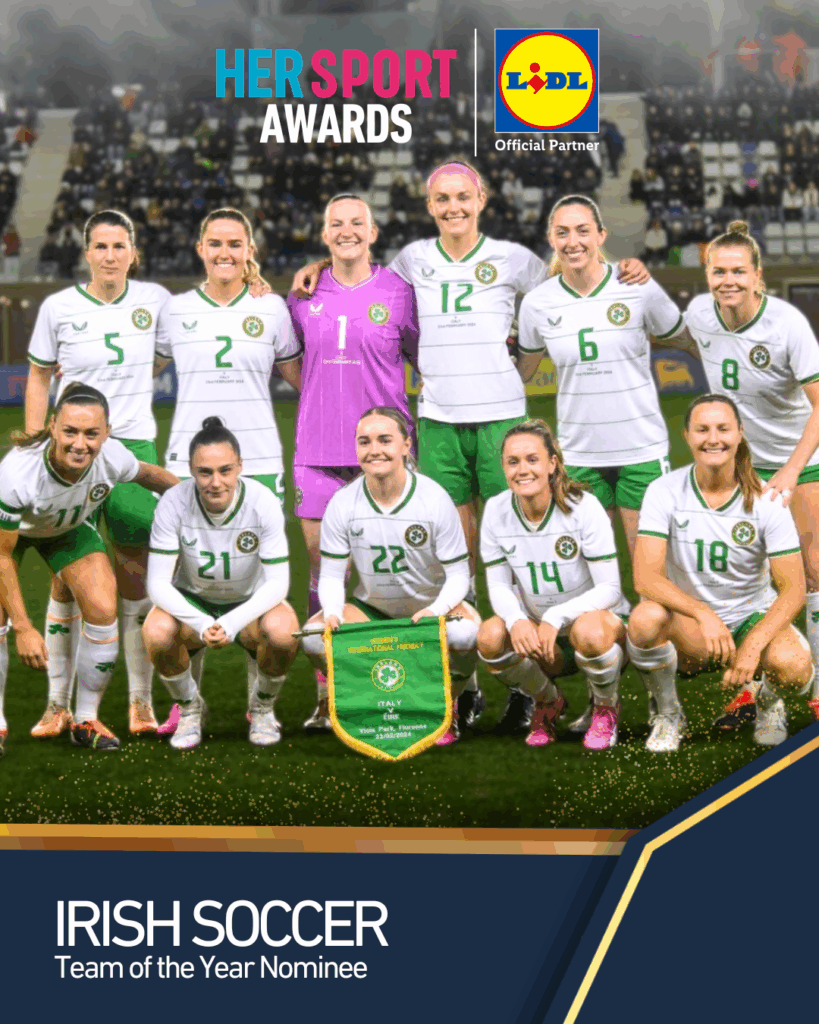
For the Ireland women’s national team, 2025 represented a fresh start and a tangible step up in results. Under newly appointed head coach Carla Ward, the group combined an updated playing identity with one of their most effective UEFA campaigns, earning promotion in the Nations League and setting a clearer course for the 2027 World Cup qualifying cycle.
The UEFA Women’s Nations League formed the spine of the year. Placed in League B, Group 2, Ireland assembled a run of form that carried them through the group phase and into the promotion play-offs. A 1–0 home win over Turkey in February provided an early platform. April then delivered a crucial double against Greece, including a 4–0 away victory that highlighted the squad’s attacking resources. The campaign’s standout home occasion arrived in June, when 9,433 supporters filled Páirc Uí Chaoimh to watch a composed 1–0 win over Slovenia. At the end of six group games Ireland’s record read five wins and one defeat – the only loss a 4–0 reversal away to Slovenia – good enough for top spot in Group B2 and a place in the promotion decider.
That play-off brought a two-legged tie against Belgium, recently relegated from League A. Ireland raised their level for the first leg at the Aviva Stadium, winning 4–2 in a performance built on intensity and clinical finishing in front of a home crowd. The return match in Leuven required more resilience than flair. Belgium won 2–1 on the night, yet Ireland’s aggregate 5–4 success secured promotion to League A and moved them into UEFA’s top competitive tier for the next Nations League cycle and the associated qualification pathway toward the 2027 World Cup.
Off the pitch, 2025 also marked the beginning of a new coaching era. Ward, appointed in January, was contracted through to the end of the next World Cup campaign and charged with leading a multi-year rebuild. She retained Katie McCabe as captain, brought new faces into the squad and experimented with tactical variations across the year. A demanding June window away to the United States, the reigning Olympic champions, resulted in two 4–0 defeats yet also offered a clear benchmark of the level Ireland aim to reach. The year concluded with a friendly against Hungary on 29 November, providing further opportunities for squad players to log international minutes within the new structure.
Throughout the Nations League programme, certain figures were central to the team’s consistency. Denise O’Sullivan played 705 of a possible 720 minutes, underlining her importance in midfield. Goals were spread among Amber Barrett, Kyra Carusa, Marissa Sheva and McCabe, while eight different players collected Player of the Match awards, reflecting a broad distribution of influence. The overall effect was a season that restored momentum and confidence around the national side.
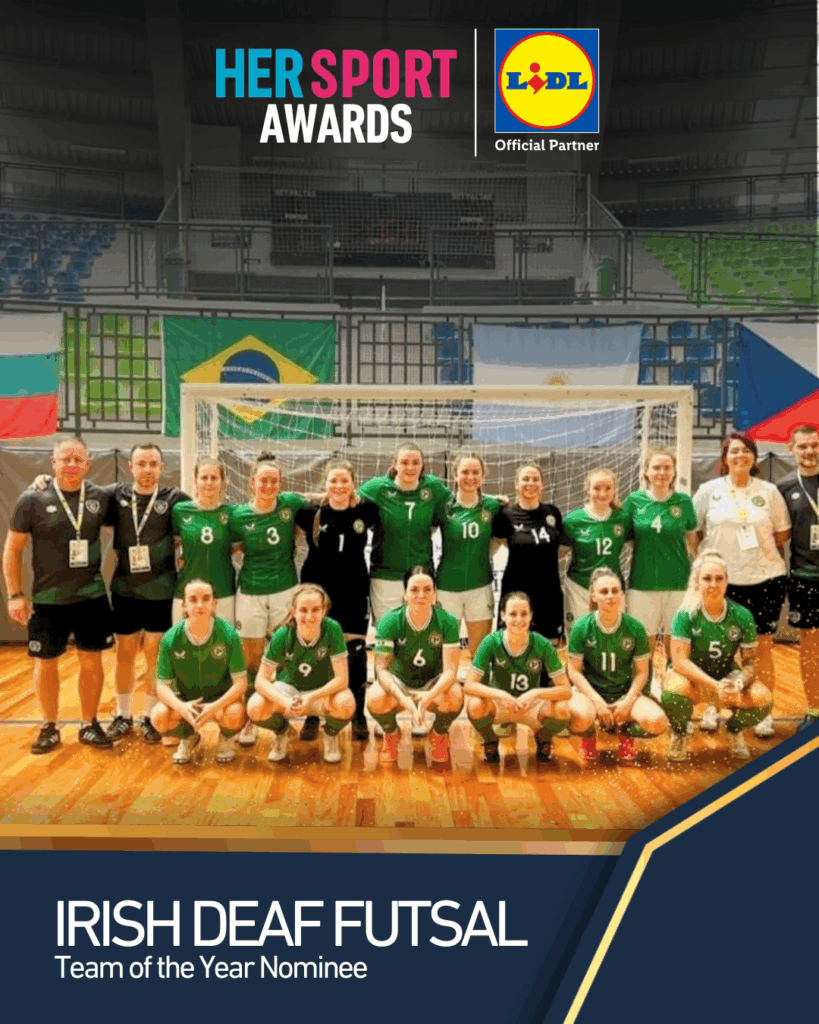
Ireland’s Deaf Women’s Futsal Team turned 2025 into a breakthrough year that reshaped expectations around the programme. At the 5th World Deaf Futsal Championships in Montesilvano, Italy, they finished fourth overall, the highest placing ever achieved by an Irish Deaf futsal team at a World Cup.
Their route to the top four demanded resilience. Drawn against elite opposition, Ireland opened with defeats to reigning European champions Spain and a narrow 2–1 loss to Brazil, with Catherine Grier on the scoresheet. Progression came through a decisive 5–1 win over Turkey, powered by goals from Rebekah Grant (2), Grier (2) and Natalie O’Brien.
The quarter-final against England became a defining moment. Trailing early, Ireland surged back to win 6–3, led by an extraordinary four-goal performance from Laura McGuinn, one of the standout individual displays in Irish futsal history. The victory carried them into their first-ever World Championship semi-final.
Brazil halted their run in the last four before Ireland contested the bronze medal match, finishing fourth and securing a historic ranking. Across the tournament, Grant’s all-round influence, Grier’s consistency, Teagan O’Reilly’s defensive presence and O’Brien’s experience anchored a squad that delivered under pressure.
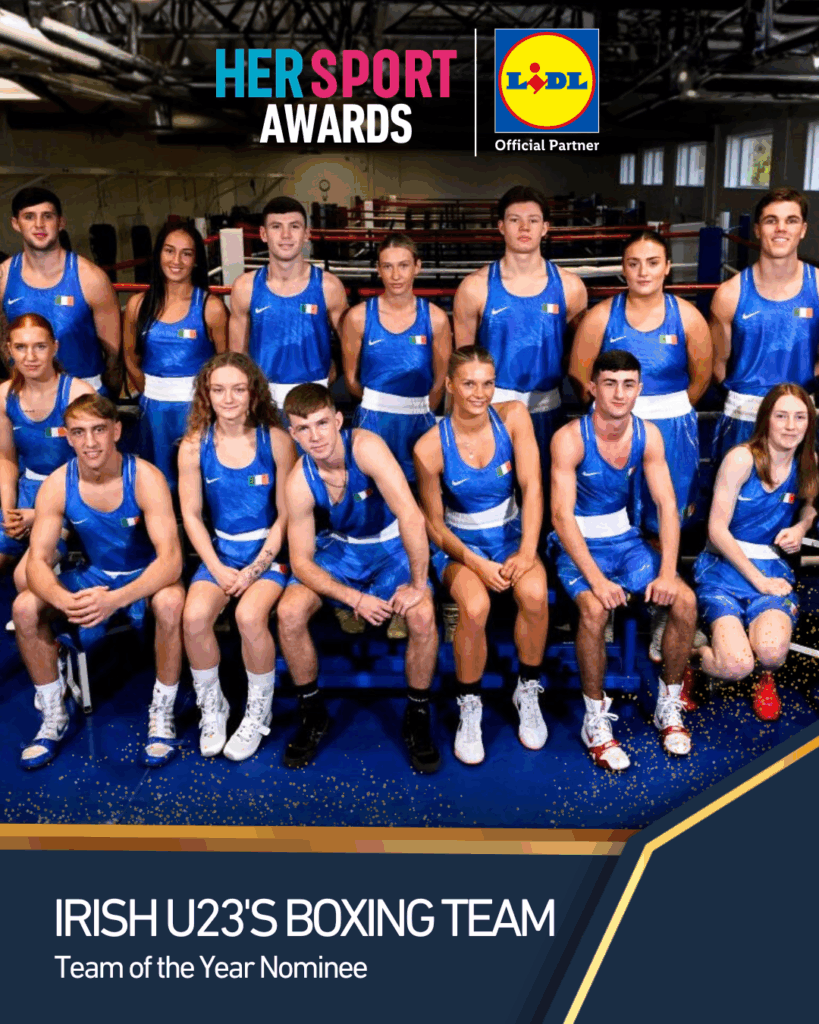
Ireland’s U23 women’s boxing squad turned the 2025 European U23 Championships into a marker of intent, emerging with five medals from the tournament and contributing significantly to the national team’s overall haul of six. The spread of success across weights and provinces underlined the strength of the pathway feeding into senior high performance.
At 57kg, Natalia Fasciszewska of Castlebar BC in Mayo produced a standout run in her first appearance at this level. She pieced together three victories en route to the final, defeating Azerbaijan’s Aynur Mikayilova, then overcoming the Netherlands’ Gabriella Weerheim on a 4–1 split decision before forcing a second-round stoppage (RSCi) against Georgia’s Khuraman Kausumov in the semi-final. In the gold-medal bout she faced Poland’s Julia Szeremeta, the reigning European champion and Paris 2024 Olympic silver medallist. A unanimous decision in Szeremeta’s favour left Fasciszewska with silver and a breakthrough tournament that signalled her arrival as a serious contender in the 57kg class.
Four further medals came in the form of bronzes. In the 80+kg division, Cliona D’Arcy of Tobar Pheadair BC, Galway, secured her place on the podium with a quarter-final win over Ukraine’s Viktoriia Shcherbyna after receiving a bye into that round. She then lost her semi-final on a 4–1 split to Turkey’s Türkmen Hikmetgul. Already a World Youth Champion in 2022, D’Arcy added another major international medal to her record.
At 65kg, Ava Henry from Dublin Docklands BC arrived as the reigning 2024 European Youth Champion. She opened her campaign in the quarter-finals and edged Slovakia’s Tamara Kubalova in a tight 3–2 split decision to guarantee bronze. Her run ended in the semi-final against England’s Kayla Allen, who later climbed to the top of the podium as European champion.
In the 60kg class, Rebecca Kavanagh of Mulhuddart BC, Dublin, took the long route to medal territory. One of only two Irish women required to win two bouts to secure a podium place, she defeated Latvia’s Laura Jakovleva in the last 16 and followed up with a clear 5–0 unanimous decision over Lithuania’s Beatricé Savickaite in the quarter-finals. Her semi-final brought a meeting with Ukraine’s Tetiana Dovhal, the eventual gold medallist, leaving Kavanagh with a hard-earned bronze.
At light-flyweight, Tiffany Spencer of Jobstown BC, Dublin, entered the draw already assured of a medal and made her tournament debut at semi-final stage. She faced Yalgettekin Nurselen in that bout and finished her first U23 European Championships with bronze, gaining valuable experience at continental level.
The squad’s depth extended beyond the medal winners. Every member of the team travelled as a 2025 National U23 Champion, evidence of the domestic standard underpinning international selection. Robyn Kelly was named Team Co-Captain, adding leadership responsibilities to her own campaign at 54kg, where the Ballynacargy BC, Westmeath boxer lost in the last 16 to an opponent from England, building on her status as a 2024 European U23 bronze medallist. At 51kg, Rachel Lawless of St. Brigid’s BC, Offaly, exited in the last 16 following a bout against Spanish opposition but gained important tournament exposure.
Ireland closed the women’s event with one silver and four bronze medals, one of the strongest returns an Irish U23 women’s team has produced in Europe.


